Care Product Insights

Care Product Insights
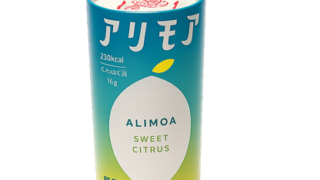
ALIMOA: A Nutritional Supplement Drink Designed for Easier Drinking

As people age, undernutrition can become a concern not only because of reduced swallowing function, but also because of reduced appetite and eating only small amounts. In my current work, I also support care recipients who have difficulty eating enough and rely on nutritional supplement drinks to help maintain their nutritional status. In this article, I will look at ALIMOA, a nutritional supplement drink released by Nutri Co., Ltd. in April 2026. One reason I became interested in this product was the 2026 revision of Japan’s dispensing fee system. I will first touch on this reimbursement-related revision, and then look at how ALIMOA differs from conventional nutritional supplement drinks. I will also share my perspective from frontline nursing and care settings. This article is based on my personal views and research. It does not guarantee the accuracy of the information. Please make your own decision when purchasing or using any product introduced here. Some links in this article may include affiliate links or PR links.
Care Product Insights

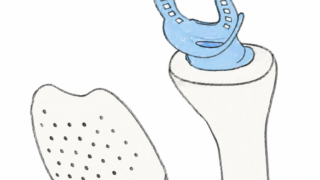
How OraBubble Works: A Mouthpiece-Type Oral Irrigator You Simply Hold in Your Mouth

マウスピース型口腔洗浄器「オーラバブル」の仕組みを、特許やファインバブル、給水・排水構造から解説。看護師の視点で、介護現場での活用可能性も考えます。
Care Product Insights

How Does “aams+” Predict Fall Risk?

Please note that this article is based on my personal views and research. It does not guarantee the accuracy of the information provided. Any decision to purchase or use the products introduced here should be made at your own discretion and responsibility.
Care Product Insights

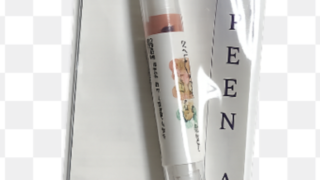
Aqure Nail Pen: Why It’s a Good Fit for Elderly Care Settings

Medical professionals often view nail polish as something that should be avoided. This is not only because staff wearing nail polish may leave a negative impression, but also because a patient’s nail polish can sometimes interfere with medical care. However, the situation can be a little different in elderly care settings. In Japan, “welfare nail care” (fukushi nail)—nail services provided to older adults and people living with illness or disability—has been gaining attention. There is even a term, “beauty care in eldercare” (kaigo beauty), reflecting a growing movement to integrate beauty into care.
Care Product Insights

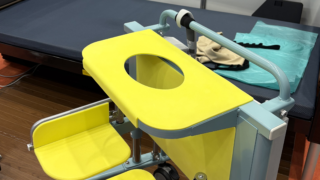
How “Ijo Desu II” Enables Safe Transfers Without Standing Up

An ergonomics-based, patent-informed review of Japan’s Ijo Desu II transfer device—how it enables seated transfers without standing, key stability features, toileting advantages, and when to use caution.
Care Product Insights

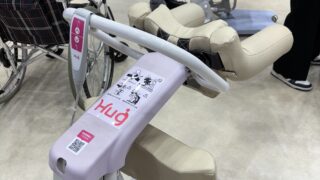
How the Hug Stand-Assist Robot Supports Standing Up

Standing up is one of the most demanding movements in transfer care — not only for the person receiving support but also for the caregiver providing it. In my previous article, I discussed physical load during transfers from an ergonomics perspective, focusing on posture, center of gravity, and the base of support. → Ergonomic Perspectives on Transfer Assistance and Low Back Pain In this article, I take a closer look at Hug, a stand-assist robot that has been gaining attention in recent years. I will explain what Hug is, how it assists the standing motion, and how its mechanism relates to the concepts described in its patent. Please note that this article reflects my personal understanding based on my own research. It is not intended to guarantee accuracy, and any decision to purchase or use the product should be made at your own discretion.
Care Product Insights

“K-Spoon” for Dysphagia

Eating is more than just taking in nutrients. For many people, it is a joy, and sharing food or drinks is a natural way to connect with others. When illness or aging makes swallowing difficult, that joy can fade. If this happens to ourselves or our loved ones, most of us still hope to “eat by mouth if possible” and to help our family do the same. To make that possible, appropriate support is essential. In addition to selecting food that is easy to swallow, the type of spoon also plays an important role. In this article, I introduce the K-Spoon, a care spoon designed with dysphagia in mind, drawing on insights from its patent specification and my own experience. Note: This article is based on the author’s personal views and independent research. It does not guarantee the accuracy or completeness of the information. Product purchases or use should always be at your own judgment and responsibility. Some product links in this article may be affiliate links (PR).
Care Product Insights

Semisolid Enteral Nutrition

Explore semisolid enteral nutrition formulas: their benefits, common challenges, and patent-based innovations for safer, more comfortable tube feeding.
Care Product Insights

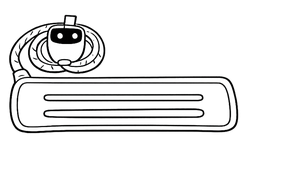
Convenient for Repositioning: Bedsore Nurse Repositioning Pad

Discover the Bedsore Nurse Repositioning Pad, designed with Fusion® 3D fabric to reduce caregiver burden and improve comfort.
Care Product Insights

30° Lateral Position Risks & the Bananafit Small Flow Type Cushion

In healthcare and long-term care settings, “positioning” is essential to prevent pressure injuries (pressure ulcers) in people who cannot move independently. Positioning means keeping the body in an appropriate posture to reduce pressure and shear, thereby maintaining comfort. Among commonly used methods is the 30° lateral position (30° tilt). In practice, however, relatively few people apply it correctly. I myself used to perform it based on a vague understanding. However, continuing to do so can invite unintended risks. This article explains the significance and pitfalls of the 30° lateral position, fundamentals of pressure injuries, and a cushion—the Bananafit Small Flow Type—which appears useful for repositioning; my discussion draws on related patent filings.