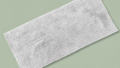
In the previous article, I looked at the structure of “Fusion,” a three-dimensional knitted fabric used in the Tokozure Nurse series, using a related patent as a reference.
Related articles:
→ How Fusion Works: The 3D Knitted Material Used in Care Products
→ Convenient for Repositioning: Bedsore Nurse Repositioning Pad
In this article, I will focus on one of the products that uses Fusion: the “Rehabilitation Stick” from Kuroda Co., Ltd.’s Tokozure Nurse series. To be honest, I used to think that this kind of grip aid could simply be replaced with a towel or something similar.
However, I now use this product for my mother. From my experience seeing various cushions and substitute items used for contracture care in frontline care settings, I have also come to feel that dedicated products have design features specific to their intended use.
In this article, I will explain what kinds of problems can occur when a hand is affected by contractures, why grip aids are used, and what features the Rehabilitation Stick offers, while also sharing my own experience.
Please note that this article is based on my personal research and interpretation. It does not guarantee the accuracy of the information. Please make any decision to purchase or use the products mentioned here at your own discretion and responsibility.
Some product links in this article may contain affiliate links (PR).
The English translations of product and feature names used in this article are descriptive translations and have not been confirmed as official English names.
Problems That Can Occur with Contracted Hands
Contractures of the limbs, including the arms, hands, legs, and feet, can occur due to conditions such as cerebrovascular disease, neurological disease, or long-term disuse. When a hand is affected by contractures, the fingers often become tightly flexed into the palm.
As a result, the following problems may occur:
・Nails may dig into the palm and damage the skin.
・It may become difficult to clean between the fingers, which can lead to dirt buildup and odor.
・Moisture may build up, which can be one contributing factor related to fungal infection.
These are all issues I often encounter in frontline care settings. A contracted hand can be difficult to open in the first place. When the hand is opened, sweat and sebum may have accumulated inside, sometimes with a distinctive strong odor.
If the area remains moist for a long time, skin maceration, or softening of the skin due to prolonged moisture, may occur. In some cases, this may also be associated with rash-like skin changes related to fungal infection.
Approaches to Hand Contractures
For contractures, rehabilitation and range-of-motion exercises are often performed with the aim of helping limit further progression. However, when a person has difficulty moving the hand in daily life, contractures may still progress in many cases.
For this reason, in care settings, care staff may place something in the hand as part of an approach to help limit further progression of contractures or to address problems caused by the hand being tightly clenched.
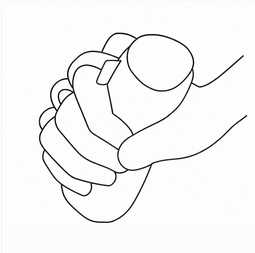
Holding something in the hand may help with the following:
・Making nails less likely to dig into the palm.
・Reducing factors that may contribute to skin issues.
・Making it easier to maintain cleanliness.
・Helping reduce odor buildup.
・Creating an opportunity for gripping and releasing movements.
I use a similar approach not only for care recipients in facilities, but also for my mother, whom I care for.
Substitute Items Commonly Used in Care Settings
There are dedicated grip aids designed to be placed in the hand. However, in actual care settings, I feel that gauze handkerchiefs, small towels, and similar items are often used as improvised alternatives.
At first glance, these items may seem practical. They are inexpensive, easy to obtain, made of cotton, and feel soft against the skin. However, when they are replaced after being used for a full day, they can sometimes be quite damp. This is because cotton absorbs sweat well, but it also tends to dry slowly.
In practice, when a person holds a damp handkerchief for a long time, it can feel as though moisture is also building up in the palm. Depending on the size of the person’s hand and the degree of contracture, these substitute items may also be difficult to fit properly. They may shift out of position or fall out.
I have also seen disposable gloves inflated and used in place of a grip aid in a hospital. The shape seemed reasonable, but I felt that there was little reason to expect much breathability.
Based on these experiences, I think there are situations where substitute items can be sufficient. However, when something is used every day, I feel that dedicated products designed with breathability and size in mind may also have value.
Features of the Rehabilitation Stick from the Tokozure Nurse Series
The Rehabilitation Stick is a small, stick-shaped cushion designed to be held in a contracted hand.
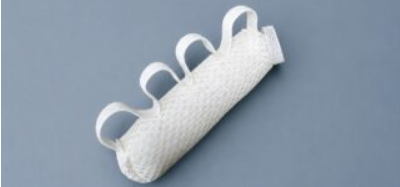
This product is used as part of care for factors related to skin issues that may occur when the hand is tightly clenched. It is also used as part of an approach to help limit further progression of contractures and to provide an opportunity for gripping and releasing movements.
It is available in different diameters, allowing selection according to hand size and the degree of contracture. It is also designed so that the fingers can hook onto it, making it less likely to fall out.
Why Fusion May Be Suitable for a Grip Aid
Grip aids are sold by various manufacturers. Some use cushioning materials such as beads. Others have shapes that allow the fingers to hook onto them so that they are less likely to fall out.
Overall, I have the impression that many of these products are quite similar. I have seen several types in care settings, but to be honest, I have rarely felt a major difference between dedicated products. At first glance, the Rehabilitation Stick also does not look dramatically different from other grip aids.
What makes it distinctive, however, is that it uses Fusion, the material introduced in the previous article.
A grip aid is a product intended to be used in an area where heat and moisture can easily build up. From my experience, the inside of a contracted hand can become much more humid than expected. I personally feel that this moisture may be involved in many of the odor and skin-related problems mentioned earlier.
From that perspective, a grip aid may need more than cushioning. Breathability and quick drying may also be important. Fusion has many air layers within its three-dimensional structure. For this reason, it is described as having breathability and quick-drying properties.
As I also mentioned when looking at the related patent in the previous article, Fusion may be understood as a material that tends to return to its original shape after compression and may help maintain resilience even after repeated compression, due to the structure of the connecting yarns.
When we consider that a grip aid may be held every day and washed repeatedly, these characteristics seem compatible with this type of daily use.
My Impressions from Actual Use
I have handled various grip aids in care settings, but to be honest, I have rarely felt a clear difference between dedicated products. It is also not always possible to clearly ask a care recipient with contractures, “Is this one easier to hold?”
For that reason, I think the product that fits best will ultimately depend on the person’s hand size, the degree of contracture, and any remaining movement in the hand. Even so, after actually using this product for my mother, I still felt that a dedicated product was easier to use in daily care.
・It is shaped in a way that makes it easier to hold.
・The size can be selected according to the degree of contracture.
・The fingers can hook onto it, making it less likely to shift out of position.
・I also feel that it is less likely to trap heat and moisture.
These points seem to offer meaningful practical advantages from a care-handling perspective. In many situations, towels or gauze can certainly be used as substitutes. However, when I think about continued daily use, I felt that a dedicated product has a certain value.
Closing Thoughts
In care for contracted hands, I do not think it is enough simply to place something in the hand. It is also important to consider how to maintain the environment inside the palm.
From that perspective, the Rehabilitation Stick seems to be more than just a grip aid. In terms of breathability, quick drying, and durability, it appears to be a product designed with attention to the environment inside the palm of a contracted hand.
It does not have any flashy features. However, I felt that it may have been developed in response to everyday care-related concerns such as moisture buildup, odor, and skin-related problems.
Please note that this article is for informational purposes only and does not guarantee the accuracy of the information. Please make any decision to purchase or use the products mentioned here at your own discretion and responsibility.
In this blog, I focus mainly on how welfare equipment, assistive products, and medical supplies are perceived in frontline care settings, and in what situations they are likely to provide value. From the perspective of medical and long-term care settings, I write with the aim of serving as a bridge between companies, business operators, and frontline care settings.
Based on this perspective, I use my frontline experience as a nurse and my knowledge of patents to provide explanations of medical materials and care products, write technical articles, review products, and offer support that may contribute to market development.
For more details, please see: Services
Please feel free to contact me through the Contact Form on this blog.
References
Kuroda Co., Ltd.
http://www.t-nurse.com/pageparts.html
Asahi Kasei Advance
https://www.asahi-kasei.co.jp/advance/jp/business/apparel_and_fiber/cubit.html