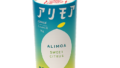
Recently, I came across a new absorbent incontinence pad released by Oji Nepia: the Nepia Tender Yakan Kaimin Pad Denbu Care series. In this article, I refer to it as the Nepia Tender Nighttime Pad for Buttock Care.
What caught my attention was that the product is designed specifically for nighttime use. Its features appear to take into account not only the care recipient’s sleep, but also the burden of nighttime diaper changes on caregivers and the potential impact of prolonged use on the skin around the buttocks.
Learning about this product also made me realize that I had not previously paid much attention to incontinence pads themselves.
I had tended to think of them as supporting items used inside adult diapers. As a result, I had not often stopped to ask: What kind of pad is appropriate? Is it suitable for this particular person?
Using the Nepia Tender Nighttime Pad for Buttock Care as a starting point, this article explores the role of incontinence pads, how to choose them, and why correct usage matters. I will also discuss related patents and reflect on my experience in nursing and long-term care settings.
This article is based on my personal views and research. It does not guarantee the accuracy of the information provided. Please make your own decision when purchasing or using any product introduced in this article.
The English translations of the product and feature names used in this article are descriptive translations and have not been confirmed as official English names.
Incontinence Pads
What Is an Incontinence Pad?
When people hear the word “diaper” in the context of long-term care, they may picture an older person who can no longer use the toilet independently.
In practice, however, disposable adult diapers and incontinence pads are not used only for older adults. In medical and long-term care settings, they are also routinely used for people who need bed rest during treatment or who have difficulty moving independently.
An incontinence pad is placed inside an adult diaper. After an episode of urination, the pad can usually be replaced without changing the entire outer diaper.
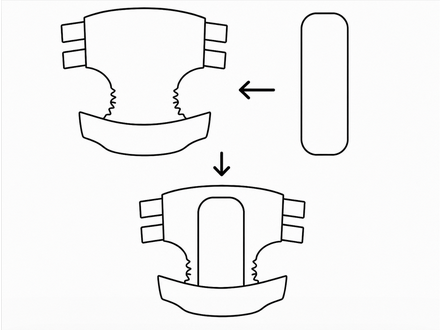
Replacing the outer diaper after every episode of urination can increase both the cost and the time required for care. Using an incontinence pad together with an outer diaper may help reduce the number of full diaper changes and ease the burden on both care recipients and caregivers.
From my own experience, when I worked in a hospital and had relatively short-term contact with patients, I do not think I considered deeply enough whether a particular diaper or pad was truly suitable for each person.
At the time, I mainly looked at whether the diaper was a pull-up or tape-fastening type, whether the size was appropriate, and whether its absorbency seemed sufficient.
Now that I work with care recipients over longer periods, I pay more attention to whether the size and shape of a diaper fit the person’s body and whether leakage is less likely to occur.
However, I still tended to see incontinence pads as supplementary items. My main concerns were how many episodes of urination a pad could absorb and how much it cost.
In some care facilities, families are asked to provide diapers and pads. In such cases, cost matters, and staff may recommend more affordable options. Incontinence pads are consumable products that may be used several times a day, so price is an important consideration.
But should incontinence pads really be selected only by looking at their absorbency rating and price?
At first glance, an incontinence pad may look like a simple item that supports the function of an adult diaper. In reality, its structure incorporates a range of features designed to absorb urine quickly, move it away from the skin, retain it inside the pad, and make leakage less likely.
Basic Structure of an Incontinence Pad
To understand the features of the new product, it is helpful to begin with the basic structure of an incontinence pad.
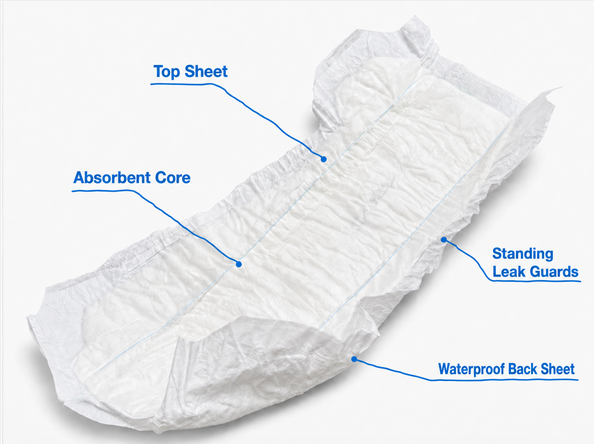
Top Sheet
The top sheet is the surface that comes into direct contact with the skin.
Its role is to allow urine to pass through to the absorbent core while helping the skin-facing surface remain as dry as possible.
Absorbent Core
The absorbent core is the part that absorbs and retains urine.
It contains a material known as a superabsorbent polymer, or SAP. SAP absorbs liquid, expands, and retains it inside the pad in a gel-like form.
Rather than simply allowing urine to soak into the pad, the absorbent core helps keep it inside. This may help limit rewetting at the surface and reduce the likelihood of leakage.
Waterproof Back Sheet
The waterproof back sheet is intended to help prevent absorbed urine from seeping through to the outside of the pad.
Standing Leak Guards
Standing leak guards form wall-like barriers that help limit urine or stool from flowing sideways out of the pad.
Common Problems When Using Incontinence Pads
Incontinence pads may help reduce the need to replace the entire outer diaper, making it easier to manage care time and costs.
However, when a pad is not suitable for the person’s condition or is not used correctly, it may contribute to problems such as leakage or skin problems.
Leakage
One of the first concerns when using an incontinence pad is leakage.
When leakage occurs, it is easy to focus only on the volume of urine. In practice, many other factors may also be involved, including body shape, sex, posture, physical movement, contractures, the position of the pad, compatibility with the outer diaper, placement technique, and bowel condition.
Skin Problems
Incontinence pads may remain in direct contact with the skin for extended periods.
For this reason, it is important to consider the potential impact of rewetting, heat and moisture buildup, and contact with stool.
Older adults often have thinner skin and may be more vulnerable to maceration and the effects of friction. Absorbency is important, but it is also necessary to consider how the pad may affect skin condition during use.
Poor Fit
Pads with high absorbency may be thicker. Using multiple pads at the same time makes the overall structure even bulkier.
Additional thickness can make it more difficult for the pad to follow the shape of the body. It can also flatten the standing leak guards of the outer diaper.
This may be particularly relevant for care recipients who can move independently. A bulky pad can feel uncomfortable and may affect posture.
For people who spend long periods in bed, contractures can make it difficult to position the pad properly and achieve a good fit.
Some care recipients may also find it difficult to express discomfort verbally. Caregivers therefore need to observe their condition carefully.
Incorrect Use
Incontinence pads look very simple.
“Open the pad and place it where it is needed.”
If that were all there was to it, anyone could do it easily. Perhaps that is why people may assume there is no need to learn the correct way to use them.
In practice, however, incorrect use may lead to various problems.
For example, if the pad is too wide or several thick pads are layered together, the standing leak guards of the outer diaper may become flattened.
Even if the size is appropriate, the side-leakage protection may not work as intended unless caregivers consciously raise the leak guards when fitting the diaper.
Layering several pads with waterproof back sheets can also make it difficult for urine to move from the upper pad to the absorbent surface below. As a result, urine may flow sideways instead.
People may feel reassured by using more pads. However, considering the structure of the products, layering pads can sometimes be counterproductive.
I once attended a training session led by a diaper manufacturer. The instructor explained the importance of placing the pad in the correct direction, raising the leak guards properly, avoiding the use of multiple overlapping pads, and not shaking the pad open, as this may cause the polymer inside the absorbent core to shift unevenly.
Understanding the structure of a diaper helps care staff understand why these steps matter. It can also make it easier to use the product as intended and understand its features.
More recently, a colleague taught me two placement techniques intended to make leakage less likely.
One is a raised, mountain-shaped placement, in which the pad is positioned so that it comes into contact with the urethral opening and can absorb urine quickly.
The other is a broader, valley-shaped placement, which is intended to receive urine over a wider area when the volume is high or when watery stool may also be present.
This reminded me that it is necessary to consider not only which product to select, but also how to position it according to each person’s pattern of urination and bowel movements.
A pad is not something that can simply be placed without thought.
Even a basic understanding of its structure and correct use may help care staff make better use of the product’s intended functions.
Challenges in Establishing Correct Use in Care Settings
Even when staff members understand the correct technique, it does not necessarily become established in daily practice.
During busy shifts, people may revert to familiar methods. In some workplaces, the techniques used by long-serving staff members may gradually become the standard approach.
For example, during night shifts, staff members may be particularly concerned about leakage. As a result, they may layer several pads in an effort to prevent it.
However, based on the structure of the pads, this approach can sometimes make leakage more likely.
Products such as adult diapers may appear simple to use. Perhaps for that reason, personal habits and informal techniques can remain in place for a long time.
This is where a gap can arise between the way manufacturers intend their products to be used and the way the products are actually used in frontline care settings.
Nepia Tender Nighttime Pad for Buttock Care
The problems described above may become even more significant during nighttime use.
Frequent diaper changes at night may disturb a care recipient’s sleep. In addition, staffing levels are often lower at night than during the day, which can result in longer intervals between changes.
When leakage occurs, clothing and bed linens may need to be changed. This can interrupt the care recipient’s sleep and increase the burden on caregivers.
On the other hand, leaving a pad in place for an extended period to reduce the number of changes may increase the impact of rewetting and heat and moisture buildup on the skin.
A nighttime incontinence pad therefore needs more than high absorbency. It also needs features designed with leakage, the burden on the skin, fit, and ease of placement in mind.
The product that caught my attention, the Nepia Tender Nighttime Pad for Buttock Care, was released in late May 2026. It focuses on challenges that may arise during nighttime care.
As of June 2026, the series is available through Nepia’s official online store. Depending on the product type, each package contains between 27 and 36 pads and is priced between ¥2,937 and ¥3,128, including tax.
The price may appear relatively high at first glance. However, the product includes features that take into account rewetting around the buttocks, watery stool, and fit.
Let us look more closely at the structural features that may help explain the price.
“Buttock Care Sheet” Designed to Limit Rewetting
When a pad is used for an extended period, absorbency is not the only factor that matters. It is also important to consider whether absorbed urine is likely to return to the skin-facing surface.
This product includes what the manufacturer calls a Buttock Care Sheet, which is designed to reduce rewetting around the buttocks, where body pressure is often concentrated.
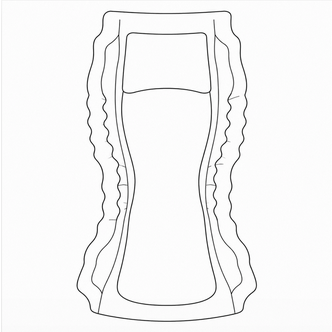
According to the product information provided by Oji Nepia, the sheet is reported to reduce rewetting by approximately 70% under the company’s test conditions.
When the volume of urine is high at night or urination occurs repeatedly, urine may spread toward the back of the pad. The structure is intended to limit contact between urine and the buttock area during extended use.
“Soft, Fluffy Embossed Surface” Designed to Release Heat and Moisture
The pad surface uses a three-dimensional textured structure described by the manufacturer as a Soft, Fluffy Embossed Surface.
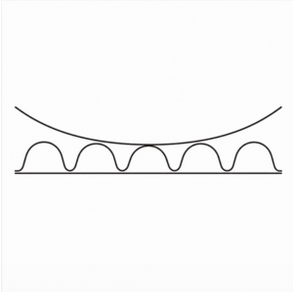
It is easy to imagine why a soft, textured surface that does not sit flat against the skin may be designed with skin comfort in mind.
According to the product information, the embossed structure is designed to create pathways for air between the skin and the surface of the pad, allowing heat and moisture to escape more easily.
This type of feature seems particularly relevant for nighttime pads, which may remain in contact with the skin for longer periods.
“3D Watery Stool Permeation System”
Although these products are commonly called incontinence pads, they also play a role in containing stool.
Soft or watery stool behaves differently from urine.
Urine can generally pass through the top sheet and move into the absorbent core. Soft or watery stool, however, contains solid components and has greater viscosity. As a result, it may be more difficult for it to pass through the top sheet.
Before passing into the absorbent core, watery stool may spread across the surface of the pad. This can contribute to leakage and prolonged contact with the skin.
To address this issue, the product incorporates what the manufacturer calls a 3D Watery Stool Permeation System.
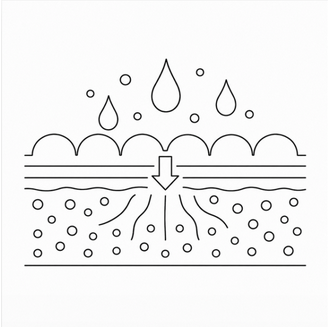
According to the product information, the spaces between the fibers in the top sheet are designed to be larger. This design is intended to help limit clogging caused by solid components in watery stool and allow the stool to pass more readily through the surface layer toward the absorbent core.
The Soft, Fluffy Embossed Surface is also designed to help limit the spread of watery stool across the surface of the pad.
To better understand this approach, I read an earlier patent filed by Oji Nepia Co., Ltd. and Oji Paper Co., Ltd. (Japanese Unexamined Patent Application Publication No. 2009-136311).
The patent proposes a technology in which thread-like or fibrous aggregates are placed on the surface of the top sheet to slow the movement of watery stool.
As watery stool moves across the surface, it needs to pass over the raised and recessed areas created by these structures. This slows its movement.
According to the mechanism described in the patent, this may make it easier for watery stool to move into the absorbent core before spreading across the entire surface. The proposed structure is intended to help limit leakage and reduce the area of skin exposed to stool.
I could not confirm whether this patented technology is used in the current product.
However, the two approaches appear to share a similar concept: using a textured surface to limit the spread of watery stool.
The patent also illustrates how the manufacturer has explored ways of addressing the problem of watery stool remaining on the surface of an incontinence pad.
This suggests that selecting an incontinence pad requires consideration not only of urine volume, but also of stool consistency.
For care recipients who frequently have watery stool, a product with this type of feature may be one option to consider.
“Central Enhanced Absorbent Core” Designed to Limit the Spread of Urine
The product also includes what the manufacturer calls a Central Enhanced Absorbent Core, which increases absorbency in the central crotch area.
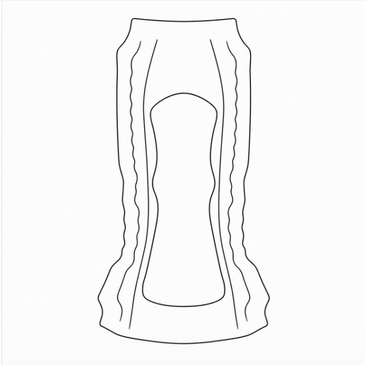
According to the product information, this structure is intended to absorb urine quickly in the center of the pad and limit its spread, which may help make leakage less likely.
Nighttime pads can become large and bulky.
However, increasing absorbency in the areas where it is particularly needed may help reduce unnecessary bulk. This is my interpretation of the product’s design rather than a confirmed statement from the manufacturer.
“Crotch-Fit Slits” Designed for Different Body Shapes
Nighttime pads are often larger and thicker than daytime pads. This can make them more difficult to position.
To address this issue, the product includes slits in the absorbent core, described by the manufacturer as Crotch-Fit Slits.
These slits are intended to make it easier to position the pad in the crotch area, even when the available space is narrower than the full width of the pad. The feature may be relevant for people with contractures that make it difficult to open the legs, as well as for people with different body shapes.
Making leakage less likely depends not only on absorbency, but also on achieving an appropriate fit and reducing gaps between the body and the pad.
In practice, some people who spend long periods in bed have significant contractures and difficulty opening their legs.
In these situations, positioning a pad along the body can be difficult enough that care staff may wonder exactly where and how it should be placed.
If the pad cannot be positioned properly, leakage may occur through gaps.
When leakage is discovered during the next diaper change, it may be another staff member or a family caregiver who needs to manage it. This often makes caregivers take extra care to avoid leakage.
The Crotch-Fit Slits are designed to make the pad easier to position and help it follow the shape of the body.
To understand this type of structure, I also read an earlier patent related to a similar technology filed by Oji Nepia Co., Ltd. and Oji Paper Co., Ltd. (Japanese Unexamined Patent Application Publication No. 2012-090818).
The patent describes a structure in which slits in the absorbent core allow the core to bend during use. This makes it easier for the crotch area to narrow and follow the shape of the body.
By allowing the crotch area to fit the body more closely, the slits can reduce excess bulk and wrinkles and improve the overall fit. This can also give the pad a neater appearance when worn.
Reducing gaps between the body and the pad may also help limit leakage.
I could not confirm whether the same patented technology is used in the current product.
However, both designs share a similar approach: adding slits to the absorbent core to make the pad easier to position.
For people with significant contractures, for whom placing a pad can itself be challenging, this type of structural feature may be worth considering in frontline care settings.
Reflections
Choosing an Incontinence Pad
I have not yet used this product myself, so I cannot evaluate how it feels in practice.
Even so, reviewing the publicly available product information reminded me that an incontinence pad should not be selected solely on the basis of how many episodes of urination it can absorb or how much it costs.
An outer adult diaper typically costs around ¥100 to ¥150 per piece. The price of an incontinence pad varies depending on its absorbency, but many pads cost several tens of yen each.
At first glance, these prices may not seem particularly high.
However, once a person begins to require diapers, the outer diapers and pads become care products that are used every day.
For example, if one outer diaper and four or five pads are used each day, the monthly cost may be around ¥10,000 or more, depending on the products selected.
Costs may increase further when highly absorbent nighttime pads are used or when leakage or soiling with stool requires more frequent changes.
Even when people want to reduce costs, it is difficult to reduce the number of pad changes drastically.
Some people therefore compare differences of only a few tens of yen per pad and search for more affordable products.
Price cannot be ignored, either in care facilities or at home.
However, if prioritizing a lower price results in more leakage or skin problems, it may also increase the need for clothing changes, laundry, and additional care.
This can ultimately increase the burden not only on the care recipient, but also on caregivers.
For this reason, I think it is important to select pads from several perspectives rather than focusing only on absorbency ratings and price.
It is helpful to consider the person’s pattern of urination and bowel movements, the way leakage occurs, the possible burden on the skin, compatibility with the outer diaper, the situation in which the pad will be used, and the circumstances of the caregiver.
Nighttime care requires particular attention because the pad may remain in place for longer periods. Rewetting, heat and moisture buildup, watery stool, and fit all need to be considered.
Why It Can Be Difficult to Try New Products
Another issue that stood out to me was how difficult it can be to try a new diaper or incontinence pad.
Even when staff members learn about a new product, it may not be easy to test it in a frontline care setting.
Hospitals and long-term care facilities often have designated diapers and pads that they use routinely.
As a result, even if a staff member is interested in trying a different product, it may not be possible to use one from another manufacturer based solely on the staff member’s own judgment.
When families are asked to bring products into a hospital or care facility, or when products are used in home care, the family usually needs to purchase them.
However, trying a different product generally means buying an entire package.
Families may hesitate if they think the remaining pads could go to waste if the product does not suit the person.
At the same time, a single sample pad may not be enough to evaluate whether the product is genuinely suitable.
There is another challenge. If staff members or family caregivers try a product without understanding its features or the correct way to use it, they may not be able to make full use of its intended functions. The product may simply be dismissed as unsuitable.
This is why it would be helpful to create opportunities for staff members and families to try products for a sufficient evaluation period after learning about their features and correct usage.
For example:
- Care facilities could be offered enough pads to test the product for approximately one week.
- Individuals and families could purchase small trial packs.
- Staff members and families could easily ask which types of care recipients a product may be suitable for and how it should be positioned.
In hospitals and care facilities, the people who decide which products to adopt are not always the same people who use them during daily care.
In home care, the people who purchase the products are often the care recipients themselves or their families.
However, the people who actually position the diapers and observe leakage and skin condition over time are usually frontline care staff, including care workers and nurses.
When care staff learn about a new product and feel that it may suit a particular person, having an easier way to try it could make it easier for them to suggest a trial to their supervisors or the person’s family.
This may support more individualized continence care.
Closing Thoughts
Researching the Nepia Tender Nighttime Pad for Buttock Care changed the way I look at incontinence pads.
An incontinence pad is not simply a supporting item placed inside an adult diaper.
It is a simple but important care product that may affect a care recipient’s daily comfort as well as the burden placed on caregivers.
Going forward, I would like to continue learning about the structures and features of new products, try them where possible, and consider which options may be suitable for each individual. I hope this will support more individualized continence care.
On this blog, I focus primarily on assistive products and medical supplies. I consider how products are perceived in frontline care settings and in what situations they are likely to provide value.
From a frontline nursing and care perspective, I aim to serve as a bridge between companies and frontline care settings.
Drawing on my hands-on nursing experience and knowledge of patents, I provide explanations of medical supplies and care products, write technical articles, review products, and offer support related to market development.
For more details, please see the Services page.
For inquiries, please feel free to contact me through the form on this blog.
This article is provided for reference purposes only and does not guarantee the accuracy of the information. Please make your own decision when purchasing or using any product.
References
Oji Nepia Co., Ltd. and Oji Paper Co., Ltd., “Absorbent Article,” Japanese Unexamined Patent Application Publication No. 2009-136311, published June 25, 2009.
Oji Nepia Co., Ltd. and Oji Paper Co., Ltd., “Absorbent Article,” Japanese Unexamined Patent Application Publication No. 2012-090818, published May 17, 2012.