Continence care is an essential part of daily care in medical and long-term care settings. Anyone who has changed a diaper in a care setting may have wondered, “Wouldn’t it be helpful if we could know what was happening inside without opening it?”
With ongoing staffing shortages in long-term care, one major challenge is how to reduce the workload involved in continence care while continuing to provide the care people need.
Helppad 2, developed by aba Inc., is a sheet-type device placed on a bed. Its sensors detect odor, humidity, and temperature, while AI analyzes the data to detect urination and defecation and provide notifications based on the configured timing for diaper changes.
But how can a system use “odor” to distinguish urination from defecation?
In this article, I look at the product’s features and underlying technology based on official information, implementation examples, and related patents filed by aba.
Please note that this article is based on publicly available information, my own research, and my personal interpretation. It does not guarantee the accuracy of the information. Please make your own decision when purchasing or using the product.
Challenges in Timing Diaper Changes
Continence care is a basic part of daily care in medical and long-term care settings.
At the same time, it is a highly personal and sensitive form of care that may cause embarrassment for the person receiving it. Some caregivers may also find it difficult to become accustomed to assisting another person with toileting and excretion.
When diapers are used as part of continence care, assistance from a caregiver is usually required for tasks such as diaper changes.
Many care recipients may also have difficulty communicating that they have urinated or had a bowel movement because of cognitive impairment, reduced consciousness, physical limitations, or other factors.
For this reason, hospitals and long-term care facilities commonly have staff check diapers at scheduled times. Scheduled diaper changes have one practical advantage: compared with waiting for a care recipient to call for assistance, they make it easier to organize the care schedule.
However, opening a diaper at a scheduled time does not necessarily mean that urination or defecation has occurred.
Even when the check turns out to be unnecessary, staff may still need to reposition the care recipient, adjust the person’s clothing, open the diaper, check inside, and then return everything to its original state. Even when there has been no urination or bowel movement, this entire process can place a burden on both the care recipient and the caregiver.
There is also the opposite problem. If a care recipient urinates or has a bowel movement shortly after a scheduled check, there may be a considerable interval before the next diaper change. In some cases, this may result in leakage. Leakage can require additional care, including changing clothing or bed linens. Prolonged contact between the skin and urine or stool may also contribute to skin-related problems.
Some care recipients can press a call button and say that they have urinated or had a bowel movement, but may have difficulty accurately sensing whether they have actually done so. In these situations, staff may check the diaper and find that nothing has actually occurred.
Of course, when a care recipient reports a need, staff need to respond and check the situation. However, when these calls overlap with other care tasks and requests for assistance, staff workload can increase further.
It is difficult to reduce continence care itself. So when facilities need to continue providing necessary care with limited staffing, an important perspective is:
reducing checks performed only to determine whether excretion has occurred, while making it easier to respond when care is actually needed.
One product designed to support this type of decision-making is Helppad 2 from aba Inc.
Helppad 2: An Excretion Detection Sensor
I had an opportunity to see Helppad 2 in person at an exhibition I attended last year.
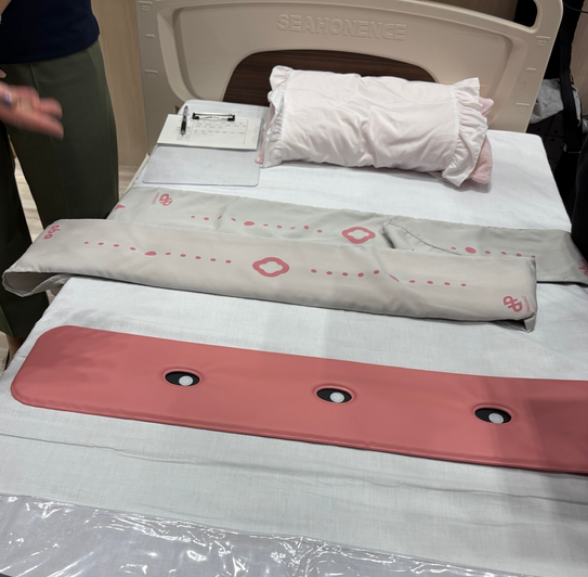
Helppad 2 is a sheet-type product. A pad containing sensors is placed on the bed underneath the care recipient.
According to the official website, Helppad 2 includes functions such as AI-based excretion detection, notifications, and recording, and is designed to support individualized continence care.
Here are some of its main features.
AI Detection of Urination and Defecation
Helppad 2 uses AI to analyze odor, humidity, and temperature data collected by its sensors and detect urination and defecation.
Notification Timing Can Be Adjusted for Each Care Recipient
Even when excretion has been detected, immediately changing the diaper may not always be the most appropriate approach for every individual.
Helppad 2 allows notification sensitivity to be adjusted for each care recipient. When the preset timing for a diaper change is reached, a notification can be sent to a computer, smartphone, tablet, or other device.
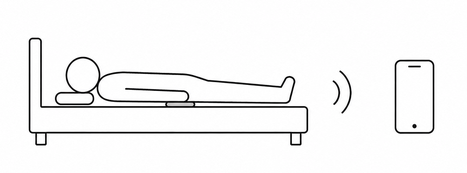
For example, in the case of a bowel movement, staff may want to change the diaper relatively soon. With urine, however, staff may not want to change the diaper every time a small amount is detected. Instead, change timing may be adjusted according to the person’s urine volume and the absorbency of the incontinence pad being used.
According to the official website, notification sensitivity and change timing can be configured for individual care recipients.
Excretion Data Can Be Recorded
Detected excretion data are automatically displayed in graph form, and staff can also record diaper changes and add notes.
The system can therefore provide more than a notification that excretion has occurred. The information may also be used to understand an individual’s pattern of urination and bowel movements and to review diaper-change schedules or the type of incontinence pad being used.
No Device Needs to Be Attached to the Body
Helppad 2 does not require a device to be attached directly to the care recipient’s body. Instead, it is placed underneath the person.
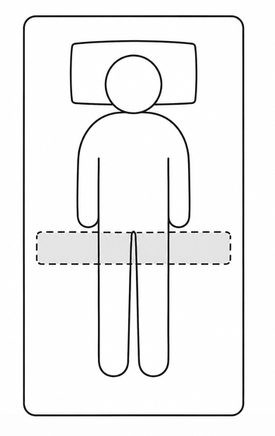
The sensors are housed inside the mat. According to the product information, the excretion sensor unit and mat can be wiped clean, while the cover can be washed.
Exploring How Helppad 2 Works Through Related Patents
One of the main features of Helppad 2 is that it can detect urination and defecation without opening the diaper.
So how can sensors placed on a bed detect excretion and even distinguish urination from defecation?
The official website explains that sensors detect changes in odor, humidity, and temperature, and that AI analyzes this information to identify urination and defecation. However, the detailed mechanism has not been publicly disclosed.
I therefore looked at two patents filed by aba and compared the technologies described in those documents with publicly available information about Helppad 2.
It is important to note that I could not confirm whether the technologies described in these patents are used in the current Helppad 2. The discussion below therefore includes both information drawn from public materials and patents and my own interpretation.
How Urination and Defecation May Be Distinguished
In frontline care settings, staff sometimes judge whether excretion has occurred based on the appearance of the outside of a diaper, how it feels when touched, or its odor. However, stool does not always produce a noticeable odor. Conversely, urine can sometimes have a strong odor that may be mistaken for stool.
For this reason, it is not always easy to determine whether excretion has occurred—and whether it is urine or stool—based only on odor or touch at a single moment.
A patent application filed in 2019, titled Excretion Detection Device and Excretion Detection Method (descriptive translation), describes a method that combines information about gases generated by excreta with information about moisture near the buttocks.
More specifically, a gas sensor detects changes in gases generated by excreta, while the amount of surrounding moisture is estimated based on capacitance between electrodes.
Capacitance is a measure of the ability to store electrical charge.
Changes in the amount of moisture around the electrodes affect capacitance, allowing the amount of moisture to be estimated from those changes.
The patent describes the basic concept approximately as follows:
- No change in gas → no excretion
- Gas change + low moisture → defecation
- Gas change + high moisture → urination, or urination and/or watery stool
In other words, the mechanism combines two types of information—gas and moisture—to determine the type of excretion.
I could not confirm whether this patented technology is used in the current Helppad 2. However, the two approaches appear to share a similar concept: making a determination by combining multiple types of information rather than relying on a single signal.
The patent also describes a mechanism in which the moisture threshold used to identify urination can be adjusted. It describes using this threshold so that a notification is not issued for a small amount of urine, but is instead issued once the detected amount reaches a certain level.
This concept appears to have some similarity to the current Helppad 2 feature that allows notification sensitivity and diaper-change timing to be configured for each care recipient. If staff can understand both the type and timing of excretion, they may be able to respond according to each person’s individual pattern rather than relying on the same scheduled diaper-change times for everyone.
This is not only about reducing staff workload. Having staff open and check a diaper even when no excretion has occurred, or being awakened during sleep simply for a diaper check or change, also affects the care recipient’s privacy and sleep.
If staff can become aware of excretion at an earlier stage, it may make it easier to respond before leakage occurs or reduce the amount of time a person remains in an uncomfortable condition. From a care perspective, shorter contact time between the skin and urine or stool may also be relevant to reducing the potential burden on the skin.
Some care recipients may remove or handle their own diaper or incontinence pad because of discomfort after excretion. In some cases, this can also mean changing clothing or bed linens. Earlier awareness of excretion may provide an opportunity to respond before these situations occur.
From this perspective, it seems to me that the value of Helppad 2 may lie not simply in detecting excretion, but in making it easier to provide necessary care at a more appropriate time.
Design Considerations for Practical Use on a Bed
Even if excretion can be detected by a sensor, the technology still needs to be practical enough for continued use in frontline care settings.
A patent filed in 2024, titled Excretion Detection Sensor Device, Excretion Detection Sensor Pad, and Sheet Member (descriptive translation), describes several design considerations intended to allow sensors to be placed beneath a care recipient and used on a daily basis.
One conventional approach involved drawing air from around the buttocks through a tube and sending it to a sensor located some distance away. However, with this method, urine or stool could enter the tube, potentially making cleaning and maintenance more difficult.
The patent therefore describes a different concept: rather than drawing air through a tube to a remote sensor, the odor sensors themselves are placed underneath the care recipient. The sensors are also not concentrated in just one location. Multiple sensors are arranged along a flexible, strip-shaped member.
When a care recipient moves or turns over in bed, the position of the buttocks can shift. A single sensor may therefore be less likely to detect excretion if the person’s position changes. Arranging multiple sensors is intended to make detection possible across a wider area.
The current Helppad 2 sensor also has a long shape that extends across the width of the bed.
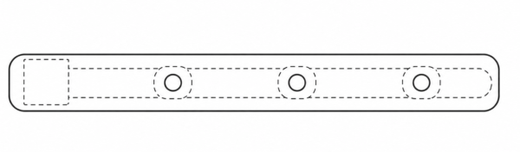
Its internal structure has not been disclosed. However, reading this patent provides one possible clue as to why a sensor used in this type of application might have such a shape.
A Structure Designed to Withstand Moisture and Body Pressure
Placing a sensor underneath a care recipient creates another set of challenges. The sensor may be exposed to body weight, friction against bedding, urine and stool, and water used during perineal care.
The patent describes several design approaches intended to address these conditions.
- Rather than mounting the sensor directly on the surface, the sensor is placed inside a recess in a supporting member. This structure makes direct contact with the body or bedding less likely and is intended to help protect the sensor from body pressure and friction.
- The part covering the sensor uses a water-vapor-permeable, waterproof material that allows water vapor and odor to pass through while making it difficult for liquid water to pass through.
- Because the sensor is sheet-shaped and placed underneath the care recipient, it needs enough flexibility to follow the contours of the body. The patent therefore describes a structure in which the overall pad uses a flexible substrate, while only the areas containing electronic components are reinforced with a rigid material.
Design Considerations for Continued Use in Care Settings
The patent also describes a system that combines an odor sensor with a pressure sensor.
The pressure sensor can be used to determine whether a care recipient is on the bed. This information can then be combined with odor sensor readings when determining whether excretion has occurred, with the aim of reducing false detections caused by odors in the surrounding environment.
I could not confirm whether this mechanism is used in the current Helppad 2. However, if a system generates frequent false alerts, it could increase the number of unnecessary staff responses and potentially add to caregiver burden.
For that reason, I feel that design considerations aimed at stable detection are particularly important for devices intended for routine use in frontline care settings.
According to the official website, the Helppad 2 cover can be washed, while the excretion sensor unit and mat can be wiped clean. Because this is a product used in continence care, the ability to clean it when it becomes soiled is, in my view, an important practical requirement.
Cost and Subsidy Programs
The official website lists the price of Helppad 2 as open pricing. Because the specific implementation cost is not publicly disclosed, facilities considering adoption would likely need to request an individual quotation.
Helppad 2 is primarily intended for facilities and hospitals rather than for individual purchase by care recipients. It therefore does not appear to be a product intended for individual use through Japan’s long-term care insurance system.
On the other hand, Helppad 2 is registered in TAIS, the welfare equipment information system operated by the Association for Technical Aids in Japan. As a result, it may qualify for certain local-government subsidy programs that support the introduction of care robots and ICT systems.
However, eligibility requirements and covered products vary by fiscal year and municipality. Facilities considering adoption therefore need to check the latest information.
What We Can Learn from Implementation Examples
The official website and a brochure I received at an exhibition include examples of Helppad 2 being used in long-term care facilities and hospitals.
I have not personally used Helppad 2 in actual continence care.
However, these examples helped me understand how an excretion detection sensor may be incorporated into frontline care.
Using Excretion Data to Review Pad Selection and Change Timing
At one facility, staff had previously relied largely on experience and intuition when estimating urine volume. One challenge was that they tended to select incontinence pads with greater absorbency than was actually necessary.
According to the implementation example, the facility reviewed pad selection and change timing using excretion data from Helppad 2. Among five care recipients in this example, three reportedly switched to smaller pad sizes.
Another implementation example reported reductions in:
- nighttime diaper changes: 35.0%
- unnecessary diaper checks in which no excretion had occurred: 90.1%
- leakage incidents: 86.2%
These figures are reported in an implementation example published in an aba Helppad 2 brochure and should be understood as results from that specific example rather than outcomes that can be expected in every facility.
Still, the fact that the facility used data rather than relying solely on experience or intuition, and then applied those findings to changes in daily continence care, gave me a sense of how this type of data could have practical value.
One of the first things that stands out about Helppad 2 is the possibility of reducing unnecessary diaper checks and changes, which may in turn be relevant to staff workload. However, the implementation examples also presented the perspective that more individualized continence care may be relevant not only to workload, but also to the dignity and daily preferences of care recipients.
I had also tended to focus first on reductions in the number of diaper changes and staff workload. Reading these examples reminded me that continence care should also be considered in terms of what lies beyond workload reduction—the dignity and preferences of the person receiving care.
Using Notifications to Support Toileting
Another example that left a strong impression on me involved using Helppad 2 notifications to support toileting.
Even when a person uses a diaper, they may still want to use the toilet.
In that example, staff used information about the timing of excretion to guide the person to the toilet, and the case report states that the person was able to urinate or have a bowel movement in the toilet following this approach.
I had previously thought of excretion detection sensors mainly as tools for responding after urination or defecation had already occurred.
For that reason, using notifications as part of toileting support—and as a way to support greater independence in continence care—was a perspective I had not considered before. It made me feel that this type of system may also have potential value in supporting a care recipient’s existing toileting abilities and their wish to use the toilet.
Considering Its Use in Frontline Care Settings
I have not personally used Helppad 2 in actual continence care. There are therefore aspects of the product, including day-to-day usability, that I cannot evaluate without firsthand use.
From a frontline nursing perspective, however, I do not think Helppad 2 is simply a product that automatically reduces workload as soon as it is introduced.
If staff respond to every notification without reconsidering the overall workflow, the system could, depending on how it is operated, actually increase workload.
Facilities need to consider questions such as:
How should scheduled diaper changes be reviewed?
Who should receive notifications?
How should notification settings be configured?
How should notifications be connected with toileting support?
I think the potential value of this type of system depends greatly on how the facility works through these questions and adapts its daily operations.
I also do not think this type of system is likely to work well if its operation is decided only by managers or left entirely to frontline staff.
Medical and long-term care settings tend to have established daily routines and workflows. I often hear that once a particular workflow has become established, staff can be reluctant to change it.
That is precisely why managers and frontline staff need to work together, while also gaining the understanding of the staff members who provide direct care, to develop a way of using the system that fits their own facility.
From this perspective, I would also like to see manufacturers provide not only examples of benefits reported after adoption, but also more concrete information about the process from initial implementation to becoming established in daily practice.
For example:
How did the facility change its workflow?
What aspects of implementation were most likely to cause difficulties?
If manufacturers could provide more individualized follow-up when facilities struggle with practical implementation after adoption, it may also become easier for care providers to imagine how the technology could realistically fit into their own operations.
If I were to use this system myself, I would want to use it as an opportunity to move away from diaper changes that can easily become fixed, time-based tasks and toward more individualized continence care.
As described in one of the implementation examples, if more care recipients could use information about their excretion timing as part of toileting support, there might also be more opportunities for people to use the toilet even if they continue to wear diapers.
Helppad 2 also appears to be compatible with aams+, a monitoring support system that I previously introduced on this blog.
(Previous article:How Does “aams+” Predict Fall Risk?)
From a frontline care perspective, I think combining monitoring information with excretion detection data may be useful when deciding whether a staff member needs to visit a care recipient’s room or when coordinating care with the timing of urination or defecation.
Rather than using each device in isolation, integration with other monitoring technologies may further broaden the ways this type of system can be used in frontline care settings.
If these technologies can be incorporated into care in ways that respect dignity and support opportunities for greater independence, their value may extend beyond reducing staff workload. They may also have a meaningful role in supporting the person’s daily life.
Closing thoughts
Continence care can be burdensome for both the person providing care and the person receiving it, and it is also highly personal and sensitive.
Helppad 2 is designed to provide information about whether excretion has occurred and when a diaper change may be needed without opening the diaper. This information can then be used when considering continence care tailored to the individual.
Based on publicly available information and implementation examples, I felt that the technology may have potential applications not only in reviewing diaper-change practices, but also in toileting support and efforts to support greater independence.
However, introducing this type of system may bring substantial changes not only in terms of cost, but also to daily workflows in frontline care settings.
To make practical use of its features, facilities need to do more than simply introduce the device. They also need to develop workflows suited to their own setting and support the implementation process until those workflows become established in daily practice.
Continence care is one of the areas of care in which staff can experience a considerable workload. If some of that burden can be reduced, it may also contribute to creating a more manageable working environment across the care setting as a whole.
In my next article, I plan to look at DFree , a different type of device designed to predict when excretion is likely to occur.
This article is for informational purposes only and does not guarantee the accuracy of the information. Please make your own decision when purchasing or using any product described in this article.
On this blog, I look not only at the technologies behind assistive products and medical supplies, but also at how products are perceived in frontline care settings and in what situations they are likely to provide value.
Drawing on my hands-on nursing experience and knowledge of patents, I provide explanations of medical materials and care products, write technical articles, conduct product reviews, and offer support related to market development.
For more information, see my Services page.
For inquiries, please contact me through the form on this blog.
References
aba Inc., Helppad 2 official website
Japanese Unexamined Patent Application Publication No. 2021-009127
“Excretion Detection Device and Excretion Detection Method”
Descriptive English translation; not confirmed as an official English title.
Japanese Patent No. 7441580
“Excretion Detection Sensor Device, Excretion Detection Sensor Pad, and Sheet Member”
Descriptive English translation; not confirmed as an official English title.