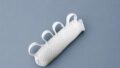
In recent years, oral health and oral care have received increasing attention in Japan’s long-term care sector. One indication of this is the introduction of additional reimbursement categories related to oral hygiene under Japan’s long-term care insurance system.
Oral care wipes are one of the everyday products used in oral care.
At first glance, they may look much like ordinary wet wipes. However, oral care wipes are intended for use inside the mouth, and their design may take into account factors such as the potential for irritation, moisture retention, and the ease of wiping away oral debris.
This article does not focus on a newly launched product or a new technology. Instead, I use information from a patent relating to an oral cleansing material as one reference point to explore the design considerations behind oral care wipes and how they are used in frontline care settings.
This article is based on my own research and personal views. It does not guarantee the accuracy of the information provided. Please make your own decision when purchasing or using any of the products mentioned.
Some product links in this article may be affiliate links. (PR)
What Are Oral Care Wipes?
Oral care wipes look similar to ordinary wet wipes, but they are intended for use on the mucous membranes inside the mouth, including the tongue, gums, inner cheeks, and palate.
Depending on the product, they may be described in Japanese as “wet sheets for oral care,” “oral wet tissues,” or “oral cleansing sheets.” A wide range of products is available from different manufacturers.


Unlike the surface of the skin, the oral mucosa does not have the same type of thick protective outer layer. It may therefore be more susceptible to dryness, friction, and irritation from certain ingredients.
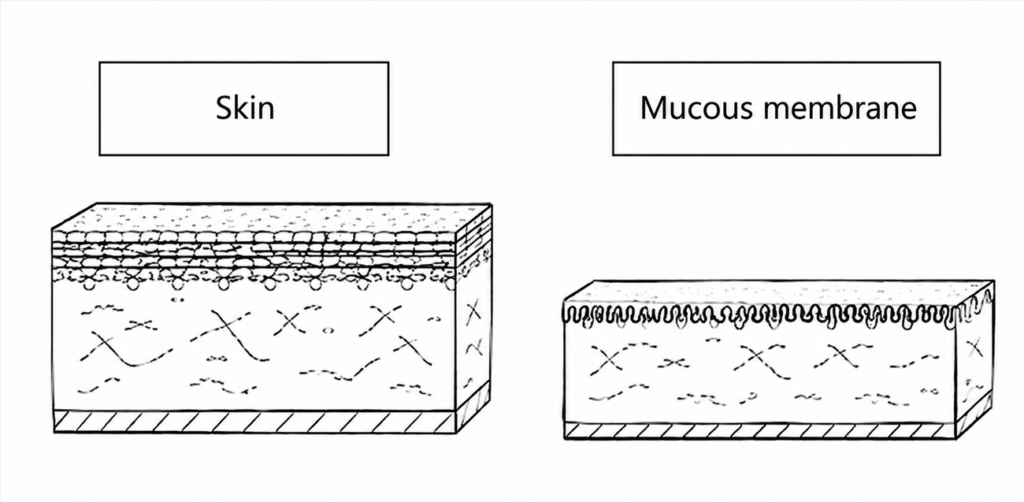
In older adults in particular, reduced saliva production, the effects of medication, mouth breathing, and reduced fluid intake may contribute to oral dryness.
When the oral cavity becomes dry, mucus and other debris may adhere more firmly to the mucosa. Trying to remove them forcefully may irritate the tissue and can sometimes lead to pain or bleeding.
Some people who require assistance with daily care have dysphagia or cognitive impairment, which may place them at greater risk of aspiration. In these cases, oral care involving water, as in conventional toothbrushing, may be difficult.
In my experience, people who have difficulty eating by mouth often seem particularly prone to oral dryness, with mucus and debris adhering to the mucosa.
Oral conditions may be associated with odor, discomfort, bleeding, and inflammation, as well as with factors related to the risk of aspiration pneumonia. This is one reason oral care remains important even for people who are not eating by mouth.
Oral care wipes are one of several products that may be used as part of oral care. They are commonly used to moisten the inside of the mouth while gently wiping away debris.
The patent reviewed for this article describes an oral cleansing material intended for older adults who are prone to oral dryness because of aging, medication use, mouth breathing, and other factors, and who may experience irritation during conventional oral care.
What to Consider When Choosing an Oral Care Wipe
I have the impression that differences between oral care wipes are not always easy to identify. Rather than being a product category in which new products appear frequently, they seem to have become a relatively standard type of care product.
In frontline care settings, staff often use whichever product has already been adopted by the facility or included in an amenity set, rather than comparing several oral care wipes before making a selection.
In home care, products may be chosen mainly on the basis of availability and price. If no particular problems arise, the same product is often used continuously.
Oral care wipes are therefore commonly treated as consumable supplies, with relatively few opportunities to compare different products.
However, they are used inside the mouth.
Ingredients that might receive little attention in a hand wipe may become more important when a product is intended for oral use. People may reasonably want to know what it contains, whether it feels irritating, and what type of flavor it has.
The patent reviewed for this article indicates that factors such as a formulation intended to limit irritation, moisture retention, liquid content, the material and structure of the nonwoven fabric, size, and thickness were considered for older adults with dry oral cavities who may find conventional oral care irritating.
In other words, even if oral care wipes do not look very different from one another, several points are worth considering when they are viewed as products intended for use inside the mouth.
The following sections examine these points in more detail, using the patent description as one source of information.
Ingredients and Sensory Experience
Oral care wipes do more than simply touch the oral mucosa. Ingredients contained in the wipe may mix with saliva and may be perceived by the care recipient as a taste or physical sensation.
If you imagine wiping the inside of your own mouth, you would probably prefer to avoid a product that feels strongly irritating or has an unpleasant taste.
The ingredients in the wipe and the properties of its liquid formulation can influence this experience.
Some oral care wipes contain alcohol.
Alcohol may be included to provide a refreshing sensation. However, it may feel irritating to people with a dry oral cavity or sensitive mucous membranes.
The patent reviewed for this article describes an ethanol-free liquid formulation intended for older adults with dry oral cavities who may experience irritation during conventional oral care.
The patent also specifies adjusting the pH of the liquid formulation to between 5.5 and 7.0 as one possible condition.
A pH range of 5.5 to 7.0 is close to neutral rather than strongly acidic or alkaline. In the patent, this range is presented as one formulation condition selected with oral irritation in mind.
Many oral care wipes are also flavored.
Some people prefer the refreshing sensation of mint. Others may dislike strong stimulation and prefer an unflavored, mild, or fruit-flavored product.
When looking at an oral care wipe, it is important to consider not only whether it removes debris, but also whether its ingredients and overall feel may cause discomfort or otherwise feel burdensome to the care recipient.
If the person can communicate clearly, comments such as “it stings,” “it tastes unpleasant,” or “it feels refreshing” may provide useful information about how they experience the product.
In my experience, however, many people who require oral care with wipes find it difficult to clearly express what they are feeling.
For this reason, I think it is important for caregivers not to focus solely on removing debris, but also to observe whether the person appears to experience irritation or discomfort during use.
For people with oral dryness or irritated mucosa, those receiving end-of-life care, or those who find it difficult to report pain or discomfort, I believe gentleness may be more important than a strong refreshing sensation.
Moisture-Retaining Properties
Many people who require oral care wipes are prone to oral dryness, and mucus and other debris may adhere firmly to the mucosa.
Before wiping away this material, it is often necessary to moisten and soften it.
The patent reviewed for this article describes a liquid formulation containing moisturizing agents such as trehalose, sodium hyaluronate, and betaine.
This indicates that the patent takes into account the need to moisten the oral cavity while wiping away debris. It describes a liquid formulation containing moisturizing ingredients for this purpose.
Balancing Moisture and Dripping
If an oral care wipe is not sufficiently moist, it may be difficult to soften dried debris, and the product may be less comfortable to use.
For a person with reduced swallowing function, excess liquid remaining inside the mouth may be a concern because of the potential for aspiration.
The patent reviewed for this article states that if the amount of liquid absorbed into the sheet is too high, the liquid may drip into the oral cavity and could potentially contribute to aspiration. It also states that if the amount is too low, the wipe may be less comfortable and practical to use.
The patent therefore describes the need to balance sufficient moisture with limiting excess dripping.
A Sheet Structure That Helps Collect Debris
As described above, debris adhering to the mucosa may become easier to remove after it has been moistened and softened.
However, it must ultimately be transferred to and collected by the wipe. The surface structure of the sheet is therefore another important consideration.
The patent describes cotton and rayon as preferable materials, taking into account factors including absorbency, feel during use, and their intended use inside the mouth.
It also describes a mesh-type nonwoven fabric as preferable from the standpoint of wiping away debris.
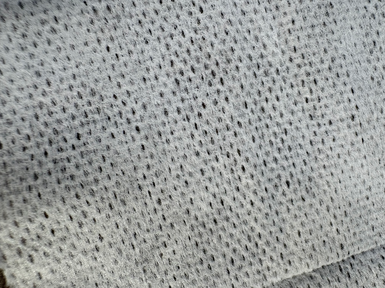
If the surface of the sheet is too flat, it may simply slide over the debris and make it more difficult for the sheet to pick it up.
However, if the surface is too rough or hard, it may feel irritating against the oral mucosa.
The patent description therefore suggests that the sheet structure needs to balance ease of wiping with consideration for the oral mucosa.
Size and Thickness for Wrapping Around a Finger
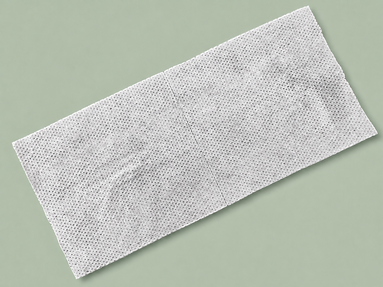
Oral care wipes are generally wrapped around a caregiver’s finger before use.
Their size and thickness therefore affect how easily the caregiver can wrap the wipe around a finger and move it inside the oral cavity.
The patent reviewed for this article explains that a sheet that is too small may make it difficult to remove debris, while a sheet that is too large may be difficult to place inside the mouth.
It also states that a sheet that is too thin may tear easily, while one that is too thick may absorb too much liquid. The balance of thickness is therefore another consideration described in the patent.
Most commercially available products may not be extremely difficult to use because of their size or thickness. Even so, the handling experience can vary between products.
Whether a wipe is easy to wrap around a finger and move inside the mouth is one of the differences that may become clearer through actual use.
The product I currently use most often has a relatively short rectangular shape and is easy to wrap around a finger.
Based on my own experience, when a wipe is not excessively thick and can be wrapped comfortably around the finger, a moderate thickness seems to cushion the fingertip slightly. I felt that this made it easier to wipe the mucosa gently.
How Oral Care Wipes Are Used in Frontline Care
In oral care for older adults, the choice of tools and methods needs to be adjusted according to the condition inside the mouth.
Oral care products include toothbrushes and sponge brushes. However, even gentle care with these tools may feel irritating or place stress on fragile oral mucosa in people who are prone to bleeding, are receiving end-of-life care, or have severe oral dryness.
In particular, when dried mucus or debris is firmly attached to the mucosa, trying to scrub it away immediately may damage the tissue or contribute to bleeding.
I have also experienced situations in which mucosal injury or bleeding occurred even though I was providing gentle oral care with a sponge brush to a person receiving end-of-life care.
For this reason, one approach used in frontline care settings is to first moisten the oral cavity with a moisturizing product and soften dried debris. The caregiver may then avoid using a brush and instead gently remove the debris with an oral care wipe.
When more thorough oral care is required, another method involves using water while simultaneously removing fluid with a suction device, similar to certain procedures performed in dental care.
However, carrying out this method with attention to the risk of aspiration requires a certain level of skill. It also takes time and effort.
Depending on the person’s condition and the care situation, oral care may therefore focus on wiping with an oral care wipe rather than using a large amount of water.
The appropriate oral care method varies according to the person’s condition, the caregiver’s skills, and the care environment.
If bleeding continues, severe pain is present, or there is a lesion inside the mouth, care should be provided in consultation with a dentist, physician, dental hygienist, or other appropriate healthcare professional.
Oral Care Wipes for Emergency Preparedness
Although they are not a replacement for regular toothbrushing, oral care wipes may have practical value as part of disaster preparedness when access to water is limited.
During a disaster, water may be scarce, and it may not be possible to use it for toothbrushing.
In such situations, oral care wipes can be used to wipe the inside of the mouth without water.
Wiping with an oral care wipe is not the same as conventional toothbrushing. Even so, I believe it may be worthwhile to keep them available as a way to remove oral debris when water cannot be used.
While researching oral care wipes, I also learned that some people keep them available for times when they are unwell or too tired to brush their teeth.
For people without particular oral care needs, oral care wipes are not intended to be used routinely as a replacement for toothbrushing.
However, as a product that allows the inside of the mouth to be wiped without water, they may be useful not only during disasters but also as a temporary option in everyday life.
Conclusion
Oral care wipes look similar to ordinary wet wipes.
Even in medical and long-term care settings, there are relatively few opportunities to compare products from different manufacturers. Oral care wipes may therefore be one of the less noticeable categories of care products.
However, they are made specifically for use inside the mouth.
Factors such as a formulation intended to limit irritation, moisture retention, liquid content, pH, the material and structure of the nonwoven fabric, size, and thickness may all be considered in product design. Different products may therefore incorporate different design choices for oral use.
There are several points to consider, including the degree of oral dryness, the person’s tendency to bleed, the presence of dysphagia, how the person experiences the taste and physical sensation, and how easily the caregiver can handle the product.
Comparing products from these perspectives may reveal differences even among oral care wipes that are often used without much thought.
Because oral care wipes are consumable care products, it may be practical to compare several options when circumstances allow. Caregivers or individuals may then find a product that feels easier to use in their particular situation.
This article is for informational purposes only and does not guarantee the accuracy of the information provided. Please make your own decision when purchasing or using any product.
In this blog, I share information about welfare equipment, medical supplies, care products, and related technologies from the perspective of medical and long-term care settings. I also consider how these products are perceived in frontline care settings and in what situations they may provide value.
Drawing on my hands-on nursing experience and knowledge of patents, I provide explanations of medical supplies and care products, technical writing, product reviews, and support related to market development.
Learn more: Services
For inquiries, please contact me through the form on this blog.
References
Japanese Unexamined Patent Application Publication No. JP2011026269A
“Oral Cleansing Material”
Publication date: February 10, 2011
Japan Dental Association
https://www.jda.or.jp/
Japan Dental Hygienists’ Association
Manual for Promoting Oral Health Management in Facilities
https://www.jdha.or.jp/pdf/outline/suishinmanual.pdf?utm_source=chatgpt.com