ebi

Medical Device Insights

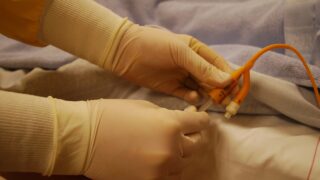
Urethral Catheter Design for Smooth Urinary Drainage

Disclaimer: This article is based on my own research and professional perspective. It does not guarantee the accuracy of the information provided. Decisions regarding purchase or use of products should be made at your own responsibility. Some links in this article may contain affiliate programs (PR).
Medical Device Insights

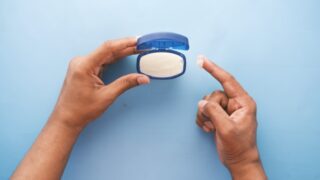
Protecting the Skin with Vaseline and Film Dressings

Explore how Vaseline and film dressings protect skin, their chemical properties, and innovations from patents. Insights for healthcare and care product fields.
Medical Device Insights

Semisolid Enteral Nutrition②: How Intragastric Gelation Works

In my previous article, “Semisolid Enteral Nutrition,” I explained formulations that are already semisolid before administration. This time, I’ll take a closer look at formulations that are delivered in liquid form but may turn into a gel once they reach the stomach. On August 10, 2025, the Silver Industry Newspaper reported that Morinaga Milk Industry launched a new intragastric gelling product called “Wanoka.” Although this type of product has existed before, the release of a new one suggests that there still seems to be steady demand for enteral nutrition products. In this article, I’ll explain the possible mechanism of intragastric gelation, referencing related patent documents. Disclaimer: This article may contain affiliate links (PR). It is based on the author’s personal research and perspective, and does not guarantee medical accuracy. Product purchase or use should always be at your own discretion and responsibility.
Care Product Insights

Semisolid Enteral Nutrition

Explore semisolid enteral nutrition formulas: their benefits, common challenges, and patent-based innovations for safer, more comfortable tube feeding.
Care Product Insights

Convenient for Repositioning: Bedsore Nurse Repositioning Pad

Discover the Bedsore Nurse Repositioning Pad, designed with Fusion® 3D fabric to reduce caregiver burden and improve comfort.
Care Product Insights

30° Lateral Position Risks & the Bananafit Small Flow Type Cushion

In healthcare and long-term care settings, “positioning” is essential to prevent pressure injuries (pressure ulcers) in people who cannot move independently. Positioning means keeping the body in an appropriate posture to reduce pressure and shear, thereby maintaining comfort. Among commonly used methods is the 30° lateral position (30° tilt). In practice, however, relatively few people apply it correctly. I myself used to perform it based on a vague understanding. However, continuing to do so can invite unintended risks. This article explains the significance and pitfalls of the 30° lateral position, fundamentals of pressure injuries, and a cushion—the Bananafit Small Flow Type—which appears useful for repositioning; my discussion draws on related patent filings.
Care Product Insights

Isotonic Jelly: Supporting Alternating Swallowing and Hydration

Pneumonia is one of the leading causes of death in Japan. While many associate pneumonia with COVID-19, aspiration pneumonia has a different cause. Aspiration pneumonia occurs when food, liquids, or saliva mistakenly enter the airway, causing inflammation. According to data from Japan’s Ministry of Health, Labour and Welfare, more than 60,000 people died of aspiration pneumonia in 2022—surpassing the annual death toll from COVID-19. With Japan’s aging population, this number is expected to rise further. As a result, oral function and aspiration prevention have become essential concerns in elderly care and nursing. In previous posts, I have introduced products aimed at reducing aspiration risk. This time, I’d like to introduce “Isotonic Jelly”, a jelly drink we recently tried in our facility to support alternating swallowing. I’ll share our practical experiences and discuss key characteristics of easy-to-swallow jellies based on relevant patent information.
Medical Device Insights

Solving Injection Resistance with the Plunger Assist Ring

e Design Innovations for Less Painful Injections” and “Pressure in Nursing Care: How It Affects Injections, IV Drips, and Pressure Ulcers” However, injection comfort is not determined by devices alone. Proper technique is essential to make the most of these tools. In practice, difficulty in pushing the syringe plunger can become a real burden for clinicians, and this often increases patient discomfort and pain. This article introduces the Plunger Assist Ring, a device designed to address this challenge. Based on patent information, we’ll explore its features, the structure of a syringe, and the physical factors that make plungers harder to push.
Medical Device Insights

Adhesive Tapes for Wound Closure: “FASNAHT” and “Steri-Strip”

When someone gets a deep cut, many people may immediately think, "This will need stitches." Yet in clinical practice, there is often another option: using adhesive wound closure tapes instead of sutures. This article introduces medical wound closure tapes, which are still not commonly known outside healthcare settings, focusing on two products: FASNAHT by Nichiban and Steri-Strip by 3M.—focusing on two products: FASNAHT by Nichiban and Steri-Strip by 3M. Their structure and features are explained based on related patent documents.
Nursing Science Basics

Pressure in Nursing Care: How It Affects Injections, IV Drips, and Pressure Ulcers

In a previous article, I wrote about one method for reducing pain from injections: using thinner needles. You can read that article here → Needle Design Innovations for Less Painful Injections The idea was that thinner needles cause less stimulation to the pain receptors in the skin, reducing the pain at the moment of insertion. However, focusing solely on needle thickness is not enough to ensure a truly painless injection. One essential factor involved is pressure. In this article, I’ll explore the concept of pressure from a nursing perspective and examine how it plays a role in injections, IV infusions, and pressure ulcer care. What Is Pressure?